

AI data analytics platforms promise to solve critical pain points like slow decision cycles, overwhelmed data teams, and insights that arrive too late to matter. Getting answers from your data shouldn’t require SQL knowledge or waiting days for an analyst to free up.
If you’re an operations leader or data analyst evaluating the benefits of ThoughtSpot business intelligence, you need clarity on what the platform actually delivers and how it compares to modern alternatives.
Today’s article explores ThoughtSpot’s core capabilities, real-world use cases, and how it stacks up against next-generation analytics agents.
What is ThoughtSpot?
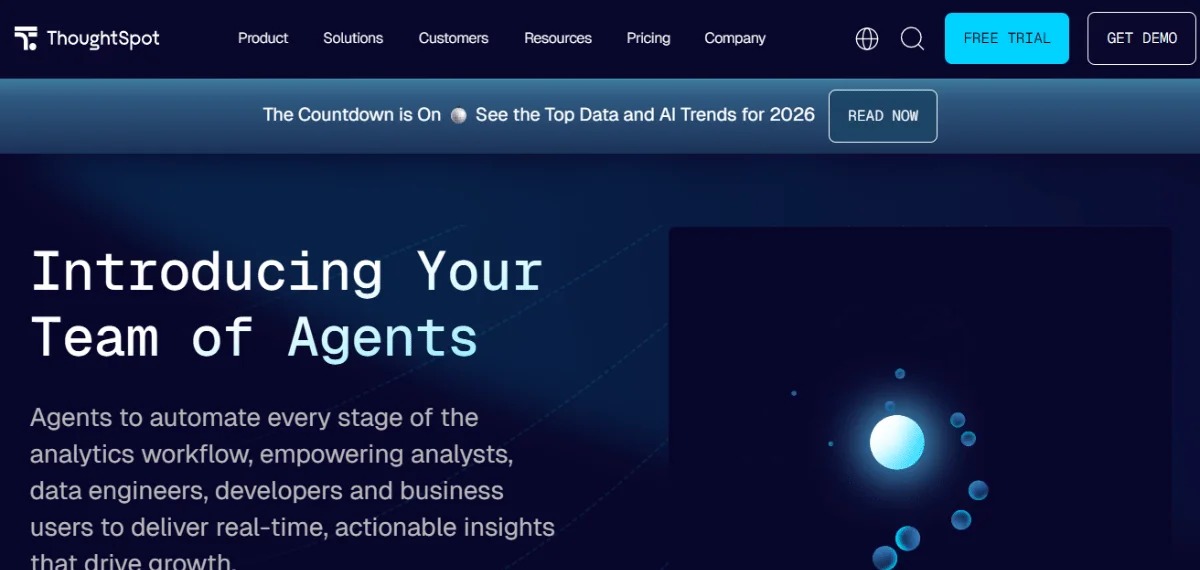
ThoughtSpot is a search-driven analytics platform that lets users query business data using natural language. The tool translates plain English questions into SQL queries and returns visualizations and dashboards without requiring technical knowledge.
Like most other platforms, ThoughtSpot targets mid-market and enterprise organizations with existing data warehouses. ThoughtSpot integrates with cloud data platforms such as Snowflake, Databricks, and BigQuery to surface insights through a search interface.
The system includes:
- SpotIQ for automated insights
- ThoughtSpot Sage for AI-powered search
- Embedded analytics capabilities.
Organizations use ThoughtSpot to democratize data access across business teams while maintaining governance controls.
ThoughtSpot positions itself as a modern alternative to legacy BI tools, focusing on search-based exploration rather than pre-built dashboards. The platform aims to reduce the bottleneck between business questions and data-driven answers.
Benefits of Using ThoughtSpot for Business Intelligence
Organizations adopt ThoughtSpot for specific advantages that address common data analytics challenges. Here’s what the platform delivers:
- Natural Language Querying: Both data and non-data team members can ask questions in plain English without writing SQL. ThoughtSpot’s search bar interprets queries like “What was revenue last quarter by region?” and generates visualizations automatically. The process makes data more accessible to business teams or non-technical users. As Plastic_Ad3717 notes on Reddit, “ThoughtSpot’s main advantage is search-based analytics. Creating a visual from a natural language query.”
- Automated Insights Through SpotIQ: The platform surfaces anomalies, trends, and patterns without manual analysis. SpotIQ runs in the background, alerting you to significant changes in key metrics, such as sudden drops in conversion rates or unexpected spikes in customer acquisition costs.
- Embedded Analytics Capabilities: You can integrate ThoughtSpot visualizations directly into your existing applications and workflows. Your teams can access analytics within the tools they already use, reducing friction and increasing adoption.
- Real-Time Data Analysis: ThoughtSpot queries live data from your warehouse rather than relying on cached reports. You can see current metrics when making decisions, not yesterday’s numbers, which matters if you’re in a fast-moving business environment.
- Collaborative Data Exploration: Multiple team members can share, annotate, and iterate on analyses together. For example, when marketing discovers an interesting customer segment, they can share the exact query and visualization with product teams for immediate follow-up.
ThoughtSpot Use Cases
Different teams leverage ThoughtSpot for specific operational needs across the organization. Here’s how various functions apply to the platform:
- Sales Operations Teams Forecast and Prioritize: Sales ops professionals can use ThoughtSpot to analyze pipeline velocity, win rates by region, and rep performance metrics. A sales director might ask, “Which deals over $50K are stuck in the negotiation stage for more than 30 days?” to identify where intervention could accelerate closing.
- Marketing Teams Optimize Campaign Performance: Marketing leaders can analyze acquisition channels, campaign ROI, and customer journey metrics using ThoughtSpot’s search interface. When a paid social campaign underperforms, marketers can quickly segment by audience, creative, and timing to identify optimization opportunities without building custom reports.
- Product Managers Understand User Behavior: Product teams can explore feature adoption, user engagement patterns, and retention metrics to inform roadmap decisions. A PM investigating churn might ask, “What features do retained users engage with in their first 30 days?” to surface patterns that guide onboarding improvements.
- Finance Teams Monitor Business Performance: CFOs and finance professionals can track revenue trends, analyze expenses, and monitor budget variances through natural language queries. When quarterly results deviate from forecast, finance can drill into specific business units, product lines, or expense categories to understand drivers without waiting for support from data analysts.

ThoughtSpot vs. Zenlytic
While ThoughtSpot delivers search-based analytics, modern analytics agents like Zenlytic offer a fundamentally different approach to data access and trust. The comparison below shows where each platform excels and where it has limitations.
Organizations evaluating these platforms should understand the architectural differences that affect day-to-day use. Here’s what sets them apart:
| Aspect | Zenlytic | ThoughtSpot |
|---|---|---|
| Natural Language Depth | Advanced conversational understanding with context retention | Good search-based queries |
| Answer Verification | Verification-locked AI with answer or number explanations | No built-in way to prevent AI hallucinations |
| Reasoning Transparency | Full logic chain plus citations for every answer | Partial explainability |
| Answer Consistency | Highly consistent through automated semantic layer | Varies depending on model |
| Setup Complexity | Plug-and-play with immediate value | Requires extensive semantic modeling and training |
| Best For | Teams wanting instant answers without complexity | Enterprise teams with technical resources for semantic modeling and training |
ThoughtSpot requires upfront investment in semantic modeling and user training to deliver value. Zenlytic connects to your data warehouse and starts answering questions immediately. Through the Clarity Engine, Zenlytic combines semantic understanding with real-time verification.
Organizations that want to prioritize governance will find value in both platforms. But Zenlytic’s Memories feature ensures consistent answers by learning organizational definitions once and applying them automatically.
For detailed feature comparisons, see the complete Zenlytic vs ThoughtSpot analysis.
Get Verified Answers, Not Just Visualizations
ThoughtSpot delivers search-based analytics, but modern teams need answers they can trust without verification overhead. Zenlytic takes a different approach:
- Explainable AI with Full Citations: Every answer Zoë provides includes complete data lineage and citations that show exactly where each number comes from. You see the reasoning chain, not just the result, which builds your teams’ trust in AI-generated insights.
- Consistent Answers Across Your Organization: Memories captures your business logic once and applies it automatically to every query. For example, when someone asks about qualified leads, they get the same definition whether they’re in sales or marketing.
- Lightning-Fast Time to Insight: You can connect your data warehouse and start asking questions immediately. You don’t need any semantic modeling or to build dashboards. You also don’t need any analyst mediation between you and your data.
See how Zoë delivers trusted answers — Request a demo today.
Common Challenges Teams Experience with ThoughtSpot
Despite its capabilities, organizations encounter specific friction points when deploying and scaling ThoughtSpot. Understanding these challenges helps set realistic expectations:
- Complex Semantic Layer Slows Initial Deployment: Building and maintaining the semantic layer requires significant involvement from the data team. Reddit user enceladus900 notes, “Users expect a performant Google-like experience that can handle any user question. What they get is a high-maintenance tool that can only answer predictable questions from requirements you already modeled.” Most organizations often underestimate the modeling work required before business users see value.
- Answer Inconsistency Creates Trust Issues: Users report getting different answers to the same question, depending on how they phrase queries. The platform’s search interpretation can vary, leading to confusion about which result represents ground truth when stakeholders compare analyses.
- Dependency on Dashboards Persists Despite Search Interface: Teams still build extensive dashboard libraries because the search experience doesn’t fully replace curated views for executive reporting. The promise of dashboard-free analytics doesn’t fully materialize in practice, which creates dual maintenance overhead.
- Training Requirements Limit Adoption: Business users need training to understand how to phrase effective queries and interpret results correctly. The best BI software for data-driven teams should reduce training overhead, but ThoughtSpot’s search paradigm requires upskilling.

Frequently Asked Questions (FAQs)
Here are answers to common questions about ThoughtSpot’s capabilities and implementation:
Can ThoughtSpot Integrate with Third-Party Visualization Tools?
ThoughtSpot primarily functions as a standalone visualization platform rather than a feeder system for external tools. The system generates its own charts and dashboards from search queries. You can export data to other tools, but ThoughtSpot aims to be your primary visualization layer rather than integrating with other BI tools.
What Are the Licensing Options Available for ThoughtSpot?
ThoughtSpot offers user-based licensing that scales with your organization. The pricing typically includes platform fees plus per-user costs that vary based on feature access levels. Enterprise contracts often bundle implementation support and training. Organizations should budget for both licensing and the data team resources they require to build and maintain the semantic layer.
How Long Does It Take to Implement ThoughtSpot?
Implementation timelines are typically months for mid-market deployments. The timeline depends heavily on the complexity of the data warehouse and the scope of the semantic layer. Enterprises with multiple data sources and complex business logic often see longer deployments. They have to model metrics, define relationships, and train users on effective search techniques.
Conclusion
ThoughtSpot delivers search-based analytics that make data more accessible to business users through natural language queries. The platform offers automated insights, embedded analytics, and real-time analysis capabilities that address common BI limitations.
Through Zoë, Zenlytic offers a different approach that eliminates setup complexity while delivering verified, consistent answers. For teams prioritizing AI data analytics tools that combine ease of use with enterprise-grade governance, Zenlytic delivers trusted answers through explainable AI. Zoë doesn’t just generate queries; she shows her reasoning, cites her sources, and maintains consistency across every interaction.
Your data team gets 50% of their time back from ad hoc requests while business users get instant answers to complex questions.