
For years, semantic layers were considered the gold standard in analytics. Define metrics upfront. Lock them down. Enforce consistency by restricting how users interact with data.
On paper, this sounds safe.
In reality, it creates new problems.
The Hidden Costs of Semantic Layers
Rigid, predefined structures come with trade-offs. When everything is locked down:
- People stop asking real questions
- Teams wait for updates instead of exploring on their own
- Users gradually lose trust in the system
The consistency semantic layers promise often comes at the cost of flexibility, speed, and innovation. And in today’s world where business questions change daily, this rigidity is a dealbreaker.
Why Flexibility + Transparency Beats Control
At Zenlytic, we took a different path.
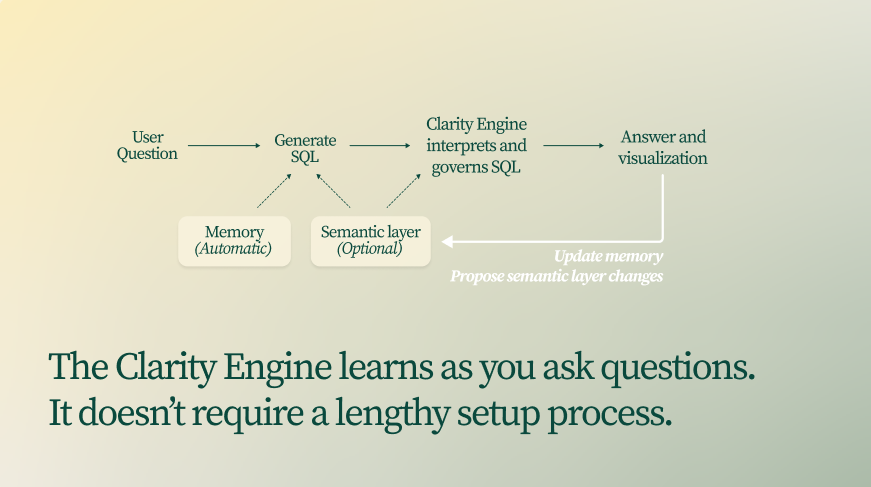
Instead of locking users into a rigid system, Zoë (our AI data analyst) interprets what the user really needs, and then shows exactly how the logic is built.
Example:
When someone asks for gross margin by channel, they don’t just get a number. They also see the SQL logic, methodology, and assumptions behind it.
That transparency builds trust—not a rigid metric catalog.
Safety Comes From Clarity
The truth is, safety doesn’t come from control—it comes from clarity.
- Users don’t need guardrails that restrict action.
- They need systems that show their work so answers can be understood, verified, and trusted.
The future belongs to AI analytics platforms that combine flexibility with explainability, giving teams both freedom and confidence.
That’s exactly what Zenlytic’s Clarity Engine was built to deliver.
Follow Paul Blankley on LinkedIn for more insights weekly.